The short answer
If you’re working to a production spec for a two-piece D&I line, start with 3104.
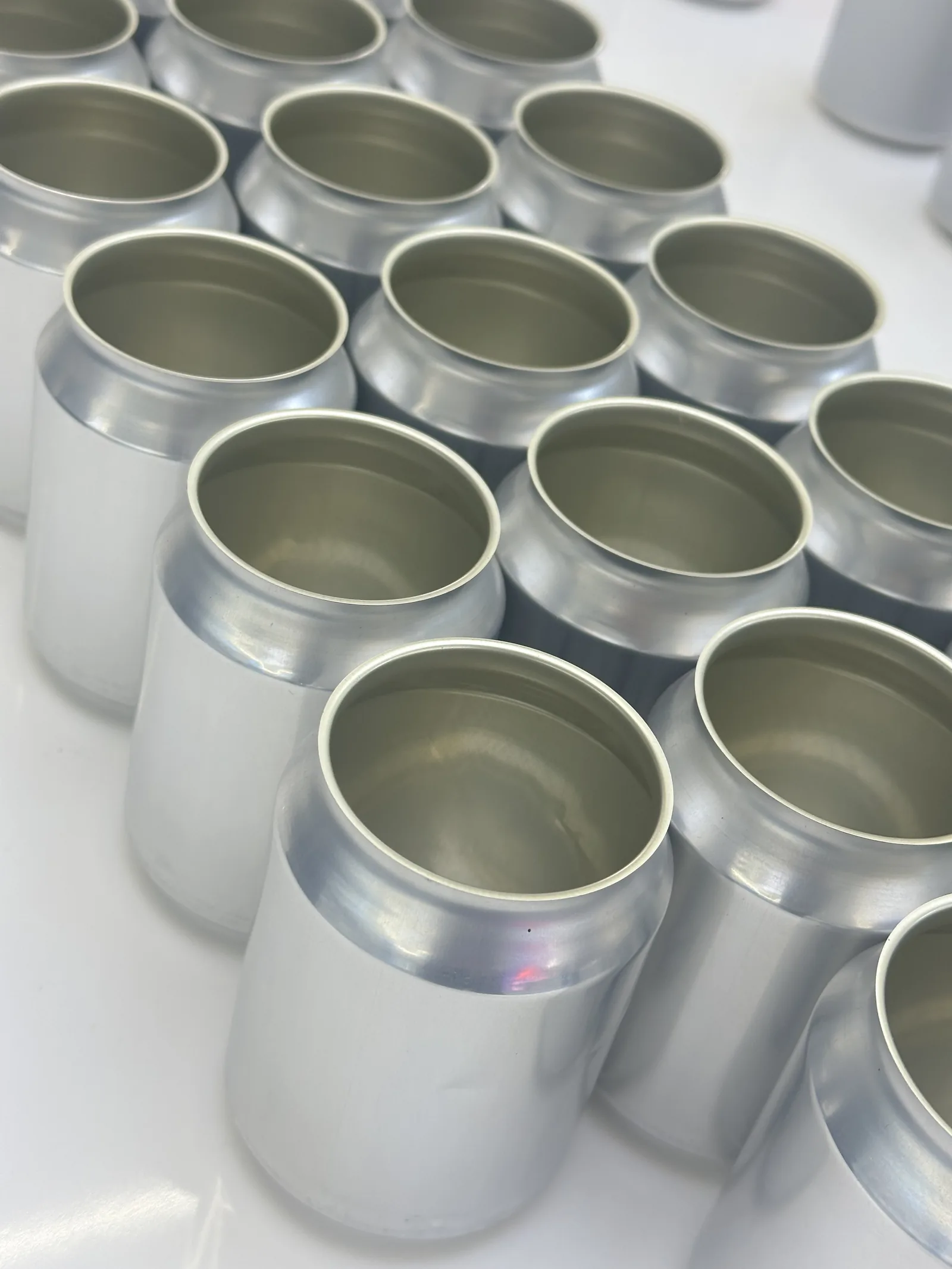
3104 is a modified 3004, built for high-speed D&I lines. It irons a little better, so bodymakers see fewer tear-offs. That’s the can wall splitting mid-stroke. In H19 it’s typically a touch stronger than 3004-H19. It’s also the only one of the two with a specified copper minimum: copper adds strength and helps the metal hold up through the coating bake. And the wider iron and silicon limits let a mill feed in more recycled can scrap. A used body and end remelt to something close to 3104, which is one reason the beverage can recycles so well.
That’s why 3104-H19 is what most two-piece D&I beverage can bodies run on, bottom included. It’s our first recommendation when someone’s writing a new spec. And 3004-H19 works too. It’s an established can body stock with specs behind it, and we can supply it. If your spec or your customer already names 3004, stay with it. 3004 also deep-draws well and covers other deep-drawn products besides cans. It just isn’t the can body alloy we’d put first.
Both alloys work. The question is which one your line was set up for.
Composition: 3104 vs 3004
Both are 3xxx series, aluminum-manganese-magnesium, and on paper their registered compositions sit close together.
| Element (wt%, max unless a range is shown) | 3104 | 3004 |
|---|---|---|
| Silicon (Si) | ≤ 0.60 | ≤ 0.30 |
| Iron (Fe) | ≤ 0.80 | ≤ 0.70 |
| Copper (Cu) | 0.05–0.25 | ≤ 0.25 |
| Manganese (Mn) | 0.8–1.4 | 1.0–1.5 |
| Magnesium (Mg) | 0.8–1.3 | 0.8–1.3 |
Registered composition limits per EN 573-3 / GB/T 3190.
Magnesium runs the same range in both, and the manganese ranges overlap so much that the core strengthening system is effectively the same. Where they differ is iron and silicon: 3104 carries higher registered limits for both. That doesn’t decide how the coil forms by itself. What decides it is how the coil behaves against the mechanical properties and forming requirements you actually agreed with your customer. Check the spec, not the table.
What the chemistry means on your line
Composition is the starting point, not the answer. The answer shows up in the cupper, the bodymaker, and the necker, and in whether every coil in the lot behaves the same way. A composition table can’t tell you that.
3104 in H19 is the usual condition for D&I can body stock. H19 is an extra-hard, strain-hardened temper, and it’s the one D&I lines are normally set up for. Earing, surface finish, ironing performance, confirm all of that against the material specification you agreed, and against what your line actually needs.
3004 will deep-draw fine, and 3004-H19 has existing specifications behind it. If your customer already qualified on 3004, that’s a real reason to stay. If you’re writing fresh, though, 3104-H19 is where we’d start.
Where each alloy fits
3104, when:
- Two-piece D&I beverage or food cans, bottom included.
- A high-speed line where one coil has to behave like the last one, at H19.
- Your spec, or your customer’s spec, already names 3104.
- You want the alloy the high-speed D&I lines already run.
- You’re upgrading your production process.
3004, when:
- Your existing spec or your customer explicitly requires it.
- You’re producing to a legacy drawing qualified on 3004, and requalifying on 3104 isn’t practical right now.
- You need a deep-drawing 3xxx alloy for a non-can job alongside your can body order.
So our recommendation is: default to 3104 for can body stock. Pick 3004 when there’s a specific reason to.
Before you order: four checks
- Read your specification first. If it names an alloy, a temper, and a gauge range, the question is already answered. Don’t switch alloys without your customer’s approval.
- Match the temper to the process. D&I can body stock is typically H19. H19 and O aren’t interchangeable. If your process was qualified on a different temper, tell us before production so the temper gets agreed against your spec.
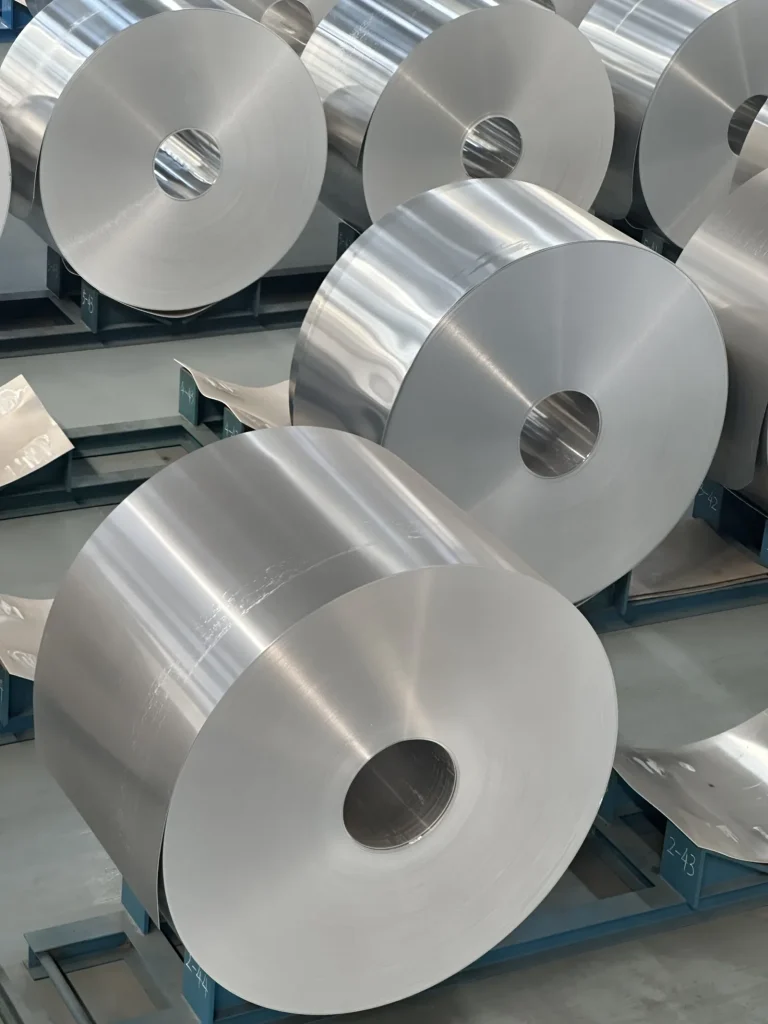
- Confirm gauge and width together. Our standard 3104 coil runs 0.2–3.0 mm, custom gauges on request. The plant’s overall cold-rolled capability covers 0.2–3.8 mm, finishing width 1200–2150 mm, hot-rolled width 1150–2150 mm. Those are overall capabilities, not a promise that every combination exists. Confirm alloy, temper, gauge, width, tolerance, and coil weight for your order, and check both against your cupper and your coil handling.
- Ask for the paperwork with the coil. Our factory is ISO 9001, ISO 14001 and ISO 45001 certified. Confirm mill certificate availability, test items, and format when you enquire.
Frequently asked questions
What thickness of 3104 do I need for can body stock?
Depends on your can size, your line, and your customer’s spec. Our standard 3104 coil is 0.2–3.0 mm, custom gauges on request; overall cold-rolled capability covers 0.2–3.8 mm. Send your drawing and target gauge and we’ll confirm what can be supplied for your order.
What widths and coil weights can you supply?
Finishing width 1200–2150 mm, hot-rolled width 1150–2150 mm, export coils up to 32 tonnes. Same caveat as above: those are overall capabilities, so confirm width, gauge, temper, tolerance, and coil weight for your order, and make sure your handling equipment can take the weight.
What is the difference between H19 and O temper?
H19 is extra-hard and strain-hardened, the usual D&I can body stock condition. O is fully annealed: softer, more formable, lower strength. They aren’t interchangeable. Confirm earing, surface finish, and ironing performance against the spec you agreed. If your process was qualified on one of them, don’t switch to the other without checking with your line engineers first.
What testing and certificates come with the coil?
Our factory is ISO 9001, ISO 14001 and ISO 45001 certified. Confirm mill certificate availability, test items, and format when you enquire.
What about MOQ and lead time?
Both are confirmed per order. Alloy, temper, gauge, width, and coil weight all feed into it, and lead time gets confirmed at the same time. Send your specification and we’ll confirm both in the quotation.
Talk to us before you specify
Writing a new can body spec? Start with 3104 in H19 and check it against your line and your customer. Already running 3004 and it works? Keep running it.
Want to compare the two on your own line? Send your drawing, gauge, width, and temper. We’ll confirm whether a trial quantity is available. The right alloy is the one your line runs best on, and the fastest way to find out is to ask with the spec in hand.
See 3104 can body stock for the full specification, or contact us with your drawing.